

Written Resources
Contact Tips
Drawing on almost three decades of providing Permanency Planning Mediation (PPM), and the unique perspective that comes from working with youth, birth families, prospective adoptive parents, legal guardians, attorneys, and social workers, we developed this resource to help families navigate post-adoption and post-guardianship connections. View and download the PDF in either English or Spanish below.

Why Contact Matters
The benefits of openness, contact, connection, identity, and family relationships
Articles
Helping Your Adopted Children Maintain Important Relationships with Family
✏️By: Child Welfare Information Gateway (CWIG)
📅Date Published: March 2026
📃Summary:
This factsheet explains how maintaining relationships with family of origin can support adopted children’s identity, grief/loss, cultural connection, medical history, belonging, and lifelong support. It also offers practical questions for adoptive parents to consider, including sibling relationships, social media contact, boundaries, safety, & mediation.
🌐URL: https://cwig-prod-prod-drupal-s3fs-us-east-1.s3.amazonaws.com/public/documents/helping-adopted-children-important-relationships-family_0.pdf?VersionId=Uk8SBloJ9Vrs6eEXFOzrFmyu6gbLo5Y6
Helping Children Connect with Their Birth Parents
✏️By: Lori Ross, Executive Director of Families Rising
📅Date Published: January 2024
📃Summary:
This article explains why birth family connection can matter for adopted youth’s identity, belonging, and emotional safety. It encourages adoptive parents to support youth’s questions and interest in relationships with birth family. The article also describes how adoptive parents can support the youth’s direct contact with family, including establishing clear boundaries, and safety planning when youth reconnect with birth family.
🌐URL: https://wearefamiliesrising.org/resource/helping-children-connect-with-birth-parents/
Embracing Connections: How to Honor Your Child’s Birth Family
✏️By: Tony Hynes, former foster youth, author, & CASE Training Specialist
📅Date Published: October 2023
📃Summary:
Tony Hynes writes from lived experience about why children need the adults in their lives to honor their birth families. The article gives caregivers practical ways to support children’s identity and belonging, including respectful language, letter-writing, safe contact when possible, cultural connection, and honest age-appropriate conversations about origin stories.
🌐URL: https://adoptionsupport.org/resource/blog/how-to-honor-your-childs-birth-family/
Separated by the System: Siblings in Foster Care Deserve Better
✏️By: Naya Taylor for Imprint News
📅Date Published: July 2025
📃Summary:
Naya Taylor describes how visits with her siblings stopped after she entered an adoptive home because her caregiver did not support the relationship and no agency made sure contact continued. Drawing on her experiences in foster care and child welfare work, she argues that agencies should keep siblings together whenever possible and create dependable contact plans when they must live apart.
🌐URL: https://imprintnews.org/youth-voice/separated-by-the-system-siblings-in-foster-care-deserve-better/262167
Research
Belonging and Reclaiming Identity: Understanding the Lived Experiences of Youth Adopted from Foster Care in Transracial Families
✏️By: UCLA TIES for Families, University of California, Los Angeles -
Ana Berman, Matthew A. Ruderman, Ana Carina Ordaz, Jill Waterman, and Audra K. Langley
📅Date Published: 2025
📃Summary:
This mixed-methods study looked at 35 youth adopted from foster care, including 21 youth in transracial adoptions and 9 transracially adopted youth who completed interviews. Survey results did not show major differences between transracially adopted youth and same-race adopted youth, but interviews showed deeper challenges with identity, belonging, trust, racism, and feeling understood by adoptive parents. The study recommends that adoptive parents and professionals create safe spaces to talk about race, culture, adoption, identity, and discrimination.
🌐URL: https://www.tandfonline.com/doi/full/10.1080/10926755.2025.2557211
Sibling relationships of youth in foster care: A predictor of resilience
✏️By: University of Iowa, Florida State University, & University of Minnesota
Armeda Stevenson Wojciak, Lenore M. McWey, Jeffery Waid
📅Date Published: January 2018
📃Summary:
The study found that youth in foster care who had warm, close relationships with their siblings showed more resilience. The authors say sibling relationships can be an important source of support and should be protected when possible.
🌐URL: https://www.sciencedirect.com/science/article/abs/pii/S0190740917307661
Open Adoption: Rethinking Family
✏️By: Harold D. Grotevant, Ph.D., University of Massachusetts, Amherst
📅Date Published: 2019
📃Summary:
Harold Grotevant explains open adoption as an adoptive kinship network that connects adoptees, adoptive families, and birth family members over time. This brief summarizes research showing that contact works best when it is safe, flexible, well-supported, and guided by the child’s needs.
🌐URL: https://drive.google.com/file/d/1zS6C0SM4hCwfSgDXVdp9bda2Ha14L8SN/view
Making Contact Work
How adults can support safe, child-focused contact over time
Articles
Helping Your Adopted Children Maintain Important Relationships with Family
✏️By: Child Welfare Information Gateway (CWIG)
📅Date Published: March 2026
📃Summary:
This factsheet explains how maintaining relationships with family of origin can support adopted children’s identity, grief/loss, cultural connection, medical history, belonging, and lifelong support. It also offers practical questions for adoptive parents to consider, including sibling relationships, social media contact, boundaries, safety, & mediation.
🌐URL: https://cwig-prod-prod-drupal-s3fs-us-east-1.s3.amazonaws.com/public/documents/helping-adopted-children-important-relationships-family_0.pdf?VersionId=Uk8SBloJ9Vrs6eEXFOzrFmyu6gbLo5Y6
Embracing Connections: How to Honor Your Child’s Birth Family
✏️By: Tony Hynes, former foster youth, author, & CASE Training Specialist
📅Date Published: October 2023
📃Summary:
Tony Hynes writes from lived experience about why children need the adults in their lives to honor their birth families. The article gives caregivers practical ways to support children’s identity and belonging, including respectful language, letter-writing, safe contact when possible, cultural connection, and honest age-appropriate conversations about origin stories.
🌐URL: https://adoptionsupport.org/resource/blog/how-to-honor-your-childs-birth-family/
Improving Open Adoptions
✏️By: National Council for Adoptions - Lori Holden, adoptive parent, educator, & author
📅Date Published: August, 2023
📃Summary:
Open adoption is more than contact; it means making space for children to talk about their birth family, their feelings, and their full story. Openness can help adoptees feel more secure, build identity, and stay connected when adults use curiosity, clear boundaries, and child-focused choices.
🌐URL: https://adoptioncouncil.org/publications/improving-open-adoptions/
Strategies for Maintaining Sibling Connections
✏️By: Creating a Family
📅Date Published: February, 2025
📃Summary:
This article offers caregivers practical strategies for helping separated siblings stay connected through calls, video chats, letters, photo updates, visits, shared activities, caregiver communication, and family traditions. The article also recognizes that contact may not always be safe or in both children’s best interests right now, and encourages adults to keep the door open when circumstances change.
🌐URL: https://creatingafamily.org/foster-care/fostering-blog/strategies-for-maintaining-sibling-connections/
Sibling Issues in Foster Care and Adoption
✏️By: Child Welfare Information Gateway (CWIG)
📅Date Published: June 2019
📃Summary:
This bulletin explains how strong sibling relationships can support children’s mental health, identity, stability, and permanency. It gives child welfare professionals and families practical ways to maintain regular contact when they live apart, including visits, calls, shared activities, therapy, and written contact plans. It also discusses federal law, barriers to sibling contact, and the importance of including children and families in planning.
🌐URL: https://www.childwelfare.gov/resources/sibling-issues-foster-care-and-adoption/
Research
Supporting Face-to-Face Birth Family Contact after Adoption from Care: Learning for Trauma-Sensitive Practice
✏️By: Mandi MacDonald
📅Date Published: August 2020
📃Summary:
This study looks at face-to-face birth family contact after adoption from care and identifies trauma-sensitive practices that can help contact work better, including preparation, emotional safety, attention to children’s perspectives, support during visits, communication outside visits, and debriefing after contact. Please note this study was done in Northern Ireland, although these strategies apply cross-culturally.
🌐URL: BJSW_final_trauma_sensitive_contact_support_clean_060720.pdf
Birth Sibling Relationships after Adoption: Experiences of Contact with Brothers and Sisters Living Elsewhere
✏️By: Cardiff University, School of Psychology in Wales
Sarah Meakings, Amy L. Paine, & Katherine H. Shelton
📅Date Published: July 2020
📃Summary:
This study followed 96 adoptive families in Wales for four years after children were placed for adoption. Most children had siblings living somewhere else, but many planned contact arrangements did not happen or faded over time. Contact worked better when adults communicated well, children had help understanding their life story, and adoptive parents had support managing direct or letterbox contact. Adoptive families described how hard it can be to support sibling contact while also protecting a child’s emotional needs and working with other families and professionals. The study offers recommendations for managing sibling contact and stresses the importance of helping children maintain sibling relationships.
🌐URL: https://academic.oup.com/bjsw/article/51/7/2478/5870989
Adoptive parents' experiences of birth parent contact in the years after placement
✏️By: Cardiff University, including the Centre for Human Developmental Science, School of Psychology, and the Children’s Social Care Research and Development Centre in Wales
Edward Janes, Amy L. Paine, Sally Holland, & Katherine H. Shelton
📅Date Published: August 2025
📃Summary:
This study looked at adoptive parents’ experiences with indirect birth parent contact, called “letterbox contact” in Wales. Most families had birth parent contact planned at placement, but contact decreased over time. The study found that contact worked best when adoptive parents, birth parents, and professionals were all engaged, and when families had help resolving problems before contact broke down.
🌐URL: https://onlinelibrary.wiley.com/doi/10.1111/fare.70032
An intervention to improve sibling relationship quality among youth in foster care: Results of a randomized clinical trial
✏️By: Oregon State University–Cascades; Portland State University; Oregon Social Learning Center; University of Minnesota; Oregon Department of Human Services partnership
Brianne H. Kothari, Bowen McBeath, Paul Sorenson, Lew Bank, Jeff Waid, Sara Jade Webb, & Joel Steele
📅Date Published: November 2016
📃Summary:
This study found that the SIBS-FC program improved sibling relationships among youth in foster care, including siblings who lived together and those who lived apart. The program taught sibling pairs skills such as cooperation, managing emotions, solving problems, and speaking up for help. The results suggest that sibling-focused skill building may help youth build stronger, more supportive relationships.
🌐URL: https://pmc.ncbi.nlm.nih.gov/articles/PMC7436335/
Talking With Youth About Family
Helping youth understand, ask about, and process family relationships
Articles
Talking with Your Child About Adoption: The Basics
✏️By: Center for Adoption Support and Education (CASE)
📅Date Published: January 2025
📃Summary:
Tips to help parents talk with children about adoption in honest, age-appropriate, ongoing ways. It explains why secrecy can harm trust, how children’s questions change over time, how to talk about birth parents and difficult information, and why children need reassurance that adoption-related loss and feelings can be discussed safely. Although this article leans toward infant adoption, there are many helpful concepts that apply to adoption under other circumstances.
🌐URL: https://adoptionsupport.org/freeresource/topical-brief-no-4-talking-with-your-child-about-adoption-the-basics/
Sharing Difficult Information
✏️By: Center for Adoption Support and Education (CASE)
📅Date Published: January 2025
📃Summary:
This article helps caregivers talk with children about difficult parts of their adoption or foster care story, including neglect, abuse, addiction, mental illness, and other serious challenges. It emphasizes truthful, age-appropriate conversations, empathy for birth parents, child emotional safety, privacy, and getting adoption-competent support when needed.
🌐URL: https://adoptionsupport.org/freeresource/topical-brief-no-5-sharing-difficult-information/
Embracing Connections: How to Honor Your Child’s Birth Family
✏️By: Tony Hynes, former foster youth, author, & CASE Training Specialist
📅Date Published: October 2023
📃Summary:
Tony Hynes writes from lived experience about why children need the adults in their lives to honor their birth families. The article gives caregivers practical ways to support children’s identity and belonging, including respectful language, letter-writing, safe contact when possible, cultural connection, and honest age-appropriate conversations about origin stories.
🌐URL: https://adoptionsupport.org/resource/blog/how-to-honor-your-childs-birth-family/
Research
Belonging and Reclaiming Identity: Understanding the Lived Experiences of Youth Adopted from Foster Care in Transracial Families
✏️By: UCLA TIES for Families, University of California, Los Angeles -
Ana Berman, Matthew A. Ruderman, Ana Carina Ordaz, Jill Waterman, and Audra K. Langley
📅Date Published: 2025
📃Summary:
This mixed-methods study looked at 35 youth adopted from foster care, including 21 youth in transracial adoptions and 9 transracially adopted youth who completed interviews. Survey results did not show major differences between transracially adopted youth and same-race adopted youth, but interviews showed deeper challenges with identity, belonging, trust, racism, and feeling understood by adoptive parents. The study recommends that adoptive parents and professionals create safe spaces to talk about race, culture, adoption, identity, and discrimination.
🌐URL: https://www.tandfonline.com/doi/full/10.1080/10926755.2025.2557211
“There may be a genetic tendency …”: How adoptive parents understand and communicate about substance use and risk behaviors with their adolescent children
✏️By: Clark University & Rutgers University
Abbie E. Goldberg, Laura Siracusa, Sophie Shuster, & David Brodzinsky
📅Date Published: February 2025
📃Summary:
This study looked at how adoptive parents talk with early adolescents about substance use and other risks. Parents often worried about genetic risk, prenatal substance exposure, mental health needs, adoption loss, and missing birth family information. The study found that parents tried to balance honesty with reassurance, helping youth understand risk without making them feel damaged, doomed, or negatively defined by their birth family history.
This is an adoption study, but it is not focused only on foster care adoption. The sample included 68 adoptive families: 39 private domestic adoptions, 18 public domestic adoptions, and 11 international adoptions; several families also lived in Canada.
🌐URL: https://www.sciencedirect.com/science/article/abs/pii/S0190740925000908
Sibling Contact
Sibling relationships, sibling rights, sibling contact, and sibling reunification
Articles
Strategies for Maintaining Sibling Connections
✏️By: Creating a Family
📅Date Published: February, 2025
📃Summary:
This article offers caregivers practical strategies for helping separated siblings stay connected through calls, video chats, letters, photo updates, visits, shared activities, caregiver communication, and family traditions. The article also recognizes that contact may not always be safe or in both children’s best interests right now, and encourages adults to keep the door open when circumstances change.
🌐URL: https://creatingafamily.org/foster-care/fostering-blog/strategies-for-maintaining-sibling-connections/
Sibling Relationships are Being Treated as Optional, And Foster Youth are Paying the Lifelong Price
✏️By: Erica Hickey for The Imprint
📅Date Published: October 2025
📃Summary:
Erica Hickey describes being separated from her younger siblings in foster care and losing regular contact with them, even while adults relied on her to help her sisters feel safe during family therapy. She explains how sibling separation can harm children’s identity, security, and emotional well-being, and calls on agencies and courts to create and enforce clear plans for sibling placement and contact.
🌐URL: https://imprintnews.org/youth-voice/sibling-relationships-are-being-treated-as-optional-and-foster-youth-are-paying-the-lifelong-price/267923
Unrooted: How Foster Care Fractured My Sibling Bonds and My Sense of Self
✏️By: Ángela Banks for The Imprint
📅Date Published: September 2025
📃Summary:
Ángela Banks describes how foster care separated her from siblings who had been her main source of safety, identity, and support. She explains how placement moves, blocked phone calls, canceled visits, and aging out without stable support weakened those relationships and caused lasting grief. She also shares how therapy, faith, and the family she has built helped her develop a new sense of safety and belonging.
🌐URL: https://imprintnews.org/youth-voice/unrooted-how-foster-care-fractured-my-sibling-bonds-and-my-sense-of-self/265187
Separated by the System: Siblings in Foster Care Deserve Better
✏️By: Naya Taylor for Imprint News
📅Date Published: July 2025
📃Summary:
Naya Taylor describes how visits with her siblings stopped after she entered an adoptive home because her caregiver did not support the relationship and no agency made sure contact continued. Drawing on her experiences in foster care and child welfare work, she argues that agencies should keep siblings together whenever possible and create dependable contact plans when they must live apart.
🌐URL: https://imprintnews.org/youth-voice/separated-by-the-system-siblings-in-foster-care-deserve-better/262167
Foster Sibling Rights in California
✏️By: Fostering Sibling Connections’ Law & Education Project
📅Date Published: December 2025
📃Summary:
California law says foster youth have the right to keep in touch with their siblings when it is safe, including visits, contact, and sometimes placement together. When siblings cannot live together or see each other, the agency and court must explain why and keep reviewing what is best for the youth.
🌐URL: https://fosteryouthhelp.ca.gov/wp-content/uploads/sites/276/2020/11/EnglishHandbook_Final1.19.21.pdf
Research
Sibling relationships of youth in foster care: A predictor of resilience
✏️By: University of Iowa, Florida State University, & University of Minnesota
Armeda Stevenson Wojciak, Lenore M. McWey, Jeffery Waid
📅Date Published: January 2018
📃Summary:
The study found that youth in foster care who had warm, close relationships with their siblings showed more resilience. The authors say sibling relationships can be an important source of support and should be protected when possible.
🌐URL: https://www.sciencedirect.com/science/article/abs/pii/S0190740917307661
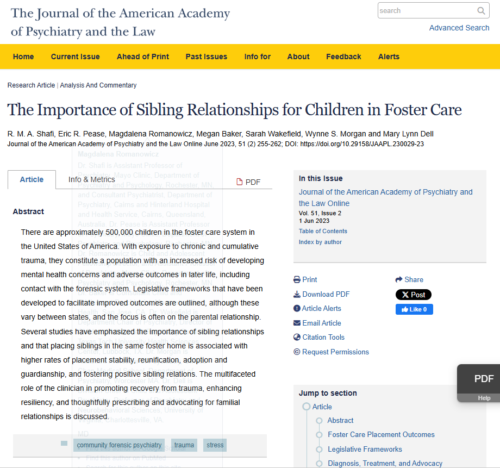
The Importance of Sibling Relationships for Children in Foster Care
✏️By: Mayo Clinic, Momentum for Health, Texas Tech University Health Sciences Center, UMass Chan Medical School, & University of Virginia
R. M. A. Shafi, Eric R. Pease, Magdalena Romanowicz, Megan Baker, Sarah Wakefield, Wynne S. Morgan, & Mary Lynn Dell
📅Date Published: June 2023
📃Summary:
This article explains that children in foster care often have trauma histories and may face higher risks for mental health challenges. It summarizes research showing that sibling relationships can support children’s stability, healing, and long-term family connection. The authors say clinicians can help by supporting safe sibling relationships and advocating for sibling contact when it serves the child’s needs.
🌐URL: https://jaapl.org/content/51/2/255
Sibling Issues in Foster Care and Adoption
✏️By: Child Welfare Information Gateway (CWIG)
📅Date Published: June 2019
📃Summary:
This bulletin explains how strong sibling relationships can support children’s mental health, identity, stability, and permanency. It gives child welfare professionals and families practical ways to maintain regular contact when they live apart, including visits, calls, shared activities, therapy, and written contact plans. It also discusses federal law, barriers to sibling contact, and the importance of including children and families in planning.
🌐URL: https://www.childwelfare.gov/resources/sibling-issues-foster-care-and-adoption/
An intervention to improve sibling relationship quality among youth in foster care: Results of a randomized clinical trial
✏️By: Oregon State University–Cascades; Portland State University; Oregon Social Learning Center; University of Minnesota; Oregon Department of Human Services partnership
Brianne H. Kothari, Bowen McBeath, Paul Sorenson, Lew Bank, Jeff Waid, Sara Jade Webb, & Joel Steele
📅Date Published: November 2016
📃Summary:
This study found that the SIBS-FC program improved sibling relationships among youth in foster care, including siblings who lived together and those who lived apart. The program taught sibling pairs skills such as cooperation, managing emotions, solving problems, and speaking up for help. The results suggest that sibling-focused skill building may help youth build stronger, more supportive relationships.
🌐URL: https://pmc.ncbi.nlm.nih.gov/articles/PMC7436335/
Birth Sibling Relationships after Adoption: Experiences of Contact with Brothers and Sisters Living Elsewhere
✏️By: Cardiff University, School of Psychology in Wales
Sarah Meakings, Amy L. Paine, & Katherine H. Shelton
📅Date Published: July 2020
📃Summary:
This study followed 96 adoptive families in Wales for four years after children were placed for adoption. Most children had siblings living somewhere else, but many planned contact arrangements did not happen or faded over time. Contact worked better when adults communicated well, children had help understanding their life story, and adoptive parents had support managing direct or letterbox contact. Adoptive families described how hard it can be to support sibling contact while also protecting a child’s emotional needs and working with other families and professionals. The study offers recommendations for managing sibling contact and stresses the importance of helping children maintain sibling relationships.
🌐URL: https://academic.oup.com/bjsw/article/51/7/2478/5870989
Books for Children, Youth and Adults
Books from the perspective of and for adoptees, birth parents, adoptive parents, youth, and families
Books for Children

A Mother for Choco
✏️By: Keiko Kasza
📅Date Published: March 1996
ISBN: 978-0-69811-364-0
Reading Level: Ages 2-5
📃Summary:
Choco wishes he had a mother, but who could she be? He sets off to find her, asking all kinds of animals, but he doesn’t meet anyone who looks just like him. He doesn’t even think of asking Mrs. Bear if she’s his mother-but then she starts to do just the things a mommy might do. And when she brings him home, he meets her other children-a piglet, a hippo, and an alligator-and learns that families can come in all shapes and sizes and still fit together.
▶️Free Book Reading (English): https://youtu.be/bzzA126sjig?si=OTxmWz96SOOYKg7j
▶️Free Book Reading (Spanish): https://youtu.be/QkXbA6dyA4A?si=ML8rM7i_BDANN7nK
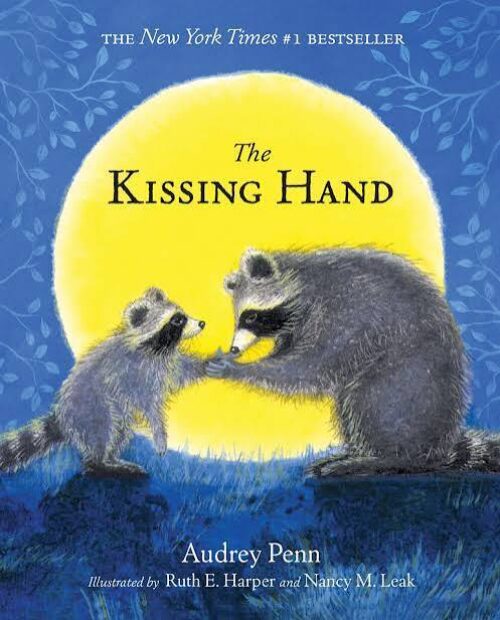
The Kissing Hand
✏️By: Audrey Penn (foster parent)
📅Date Published: October 1993
ISBN: 978-1-93910-042-9
Reading Level: Ages 3-7
📃Summary:
This picture book helps young children remember that love continues when someone is not physically present. It can be used as a simple goodbye ritual after visits or contact, or during adoption adjustment when a child is coping with separation.
▶️Free Book Reading (English): https://youtu.be/JJq-K9hGIpA?si=5ckZoc_PD5iNS1T0
▶️Free Book Reading (Spanish): https://youtu.be/LayH0l8bQj4?si=B-MK3Dmpo-vMkjTl
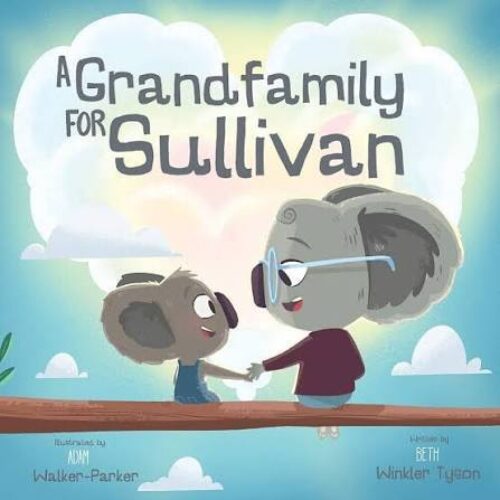
A Grandfamily for Sullivan: Coping Skills for Kinship Care Families
✏️By: Beth Winkler Tyson, MA
📅Date Published: November 2019
ISBN: 978-1-70679-466-0
Reading Level: Ages 3-7
📃Summary:
Sullivan, a young koala, goes to live with his grandmother when his parents cannot keep him safe. The story can help children in kinship care talk about family separation, worry, anger, uncertainty, and coping skills.
▶️Free Book Reading (English): https://youtu.be/OG4lYHZxq2M?si=Qnikjb-Fd1d4Zbr3
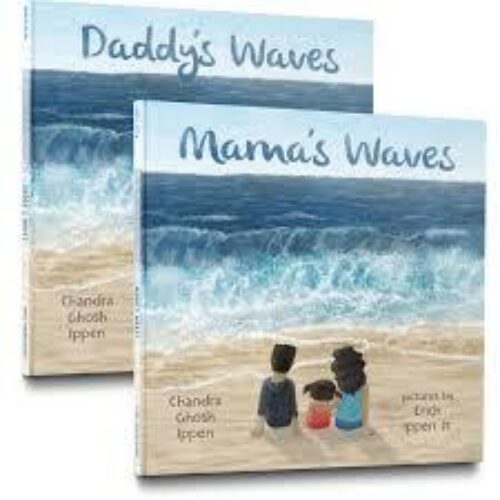
Mama’s Waves & Daddy’s Waves
✏️By: Chandra Ghosh Ippen, PhD
📅Date Published: September 2020
ISBN: 978-1-95016-809-5
Reading Level: Ages 3-9
📃Summary:
Mama’s Waves and Daddy’s Waves help young children talk about a parent’s emotional ups and downs, missed visits, sadness, anger, loving memories, and support from safe adults. These books can help adults open gentle, honest conversations when a parent struggles with mental illness, trauma, substance use, addiction, or inconsistent contact.
Note: There are two versions of this book, identical except one is about birthmother and the other is about birthfather.
▶️Free Book Reading (English): https://www.youtube.com/watch?v=2Qk8jUPC1fQ&t
▶️Free Book Reading (Spanish): https://youtu.be/Z-0kQjh6rKI?si=e6Hi3107mTwC0xuJ
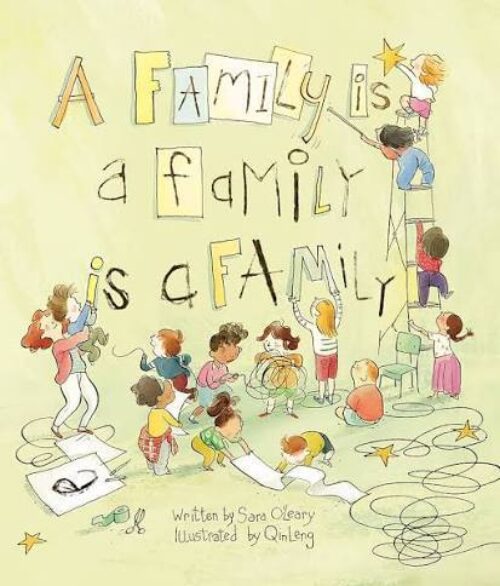
A Family Is a Family Is a Family
✏️By: Sara O’Leary
📅Date Published: September 2016
ISBN: 978-1-55498-794-8
Reading Level: Ages 4-7
📃Summary:
This picture book introduces many kinds of families and helps children see that families can look different while still being full of care and belonging. It is useful for broad conversations about family diversity, but it does not directly address adoption history, birth family, sibling contact, or grief/loss.
▶️Free Book Reading (English): https://www.youtube.com/watch?v=xfkd4Ut3DSA
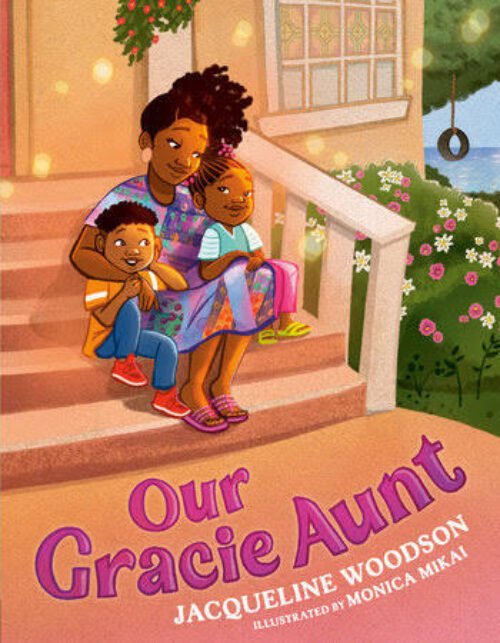
Our Gracie Aunt
✏️By: Jacqueline Woodson
📅Date Published: January 2026
ISBN: 978-0-59353-087-0
Reading Level: Ages 4-8
📃Summary:
This picture book follows Johnson and Beebee, two siblings who go to live with their Aunt Gracie when their mother cannot care for them. The story can help young children talk about moving in with a relative, missing a parent, feeling unsure about a new caregiver, sibling support, family love, and seeing a parent again.
▶️Free Book Reading (English): https://youtu.be/8JiltR258vk?si=brOCmWT38LXktVPW
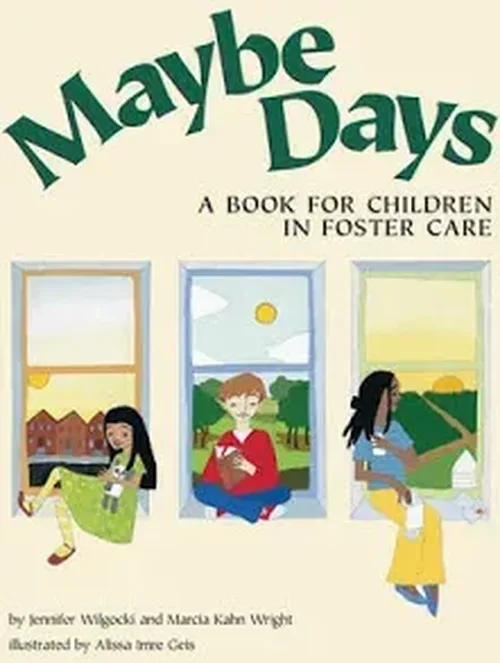
Maybe Days: A Book for Children in Foster Care
✏️By: Jennifer Wilgocki, MS and Marcia Kahn Wright, PhD
📅Date Published: December 2001
ISBN: 978-1-55798-802-7
Reading Level: Ages 4-9 (Kindergarten to 3rd Grade)
📃Summary:
A reassuring and honest story for children in foster care navigating uncertainty. For children in foster care, many questions don’t have simple answers. Will I go back home? Will I stay here forever? Often, the answer is “maybe.” Maybe Days gently addresses the uncertainty children experience when so much about their lives feels unknown. Through clear, compassionate language, the book gives voice to the questions, worries, and mixed emotions that are common during foster care transitions.
▶️Free Book Reading (English): https://www.youtube.com/watch?v=Fcg8OqiO41A
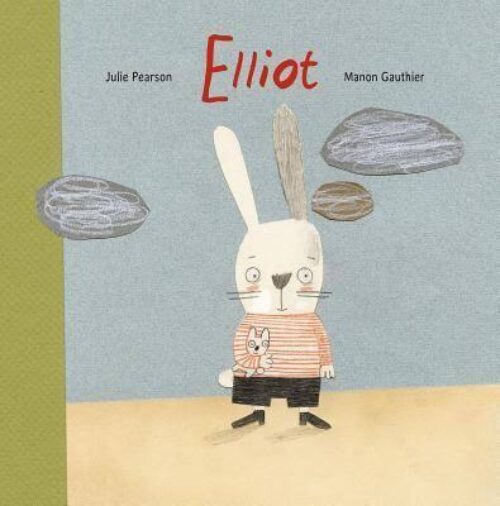
Elliot
✏️By: Julie Pearson (adoptive mother)
📅Date Published: April 2016
ISBN: 978-1-92748-585-9
Reading Level: Ages 5-8
📃Summary:
This picture book follows Elliot, a young child whose parents love him but cannot safely care for him, as he moves through foster care and toward a permanent adoptive home. The story can help children talk about social workers, new caregivers, confusing moves, big feelings, and adoption.
▶️Free Book Reading (English): https://youtu.be/WOpAx6_j1EI?si=2YRhVUnAR-CNILM5
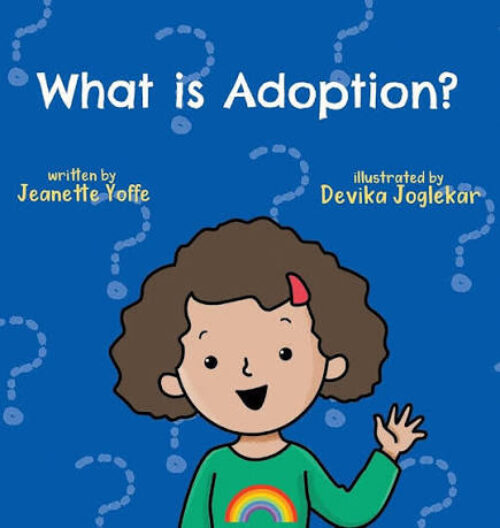
What is Adoption? For Kids!
✏️By: Jeanette Yoffe, MA, LMFT (former foster youth & trauma therapist)
📅Date Published: November 2021
ISBN: 978-1-08798-948-8
Reading Level: Ages 5-11
📃Summary:
With warm illustrations and simple language, this book explores how adoptive families are formed and the complex feelings adoption can bring up for children. Written by a therapist who is also adopted, it gently opens conversations about identity, grief, loss, and family.
▶️Free Book Reading (English): https://youtu.be/ukxdkDpAS6M?si=L10Ti5fCaGc8bBki
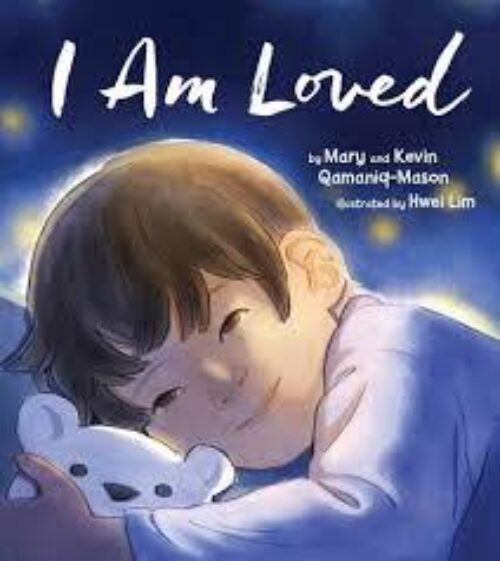
I Am Loved
✏️By: Kevin & Mary Qamaniq-Mason (foster & adoptive parents)
📅Date Published: April 2021
ISBN: 978-1-77227-281-9
Reading Level: Ages 6-8
📃Summary:
Pakak is in a new foster home, with new people, new food, and new smells. Feeling alone and uncertain, Pakak finds comfort in a secret shared with him by his anaanattiaq, his grandmother, and in the knowledge that he is loved no matter how far away his family may be.
Written as a gift for Inuit children in care by foster parents Kevin and Mary Qamaniq-Mason, this book is lovingly imbued with cultural familiarities that will resonate with children who, like Pakak, are navigating the unknown.
▶️Free Book Reading (English): https://youtu.be/kRny9uCtL0o?si=_KxSBnBS8-1iExHn
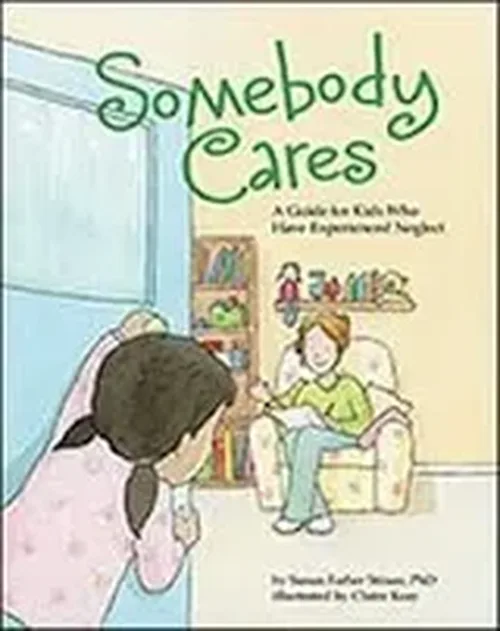
Somebody Cares: A Guide for Kids Who Have Experienced Neglect
✏️By: Susan Farber Straus, PhD
📅Date Published: March 2016
ISBN: 978-1433821097
Reading Level: Ages 6-10
📃Summary:
This children’s book helps children who have experienced neglect understand that their feelings and behaviors make sense, that they are not to blame, and that caring adults can help.
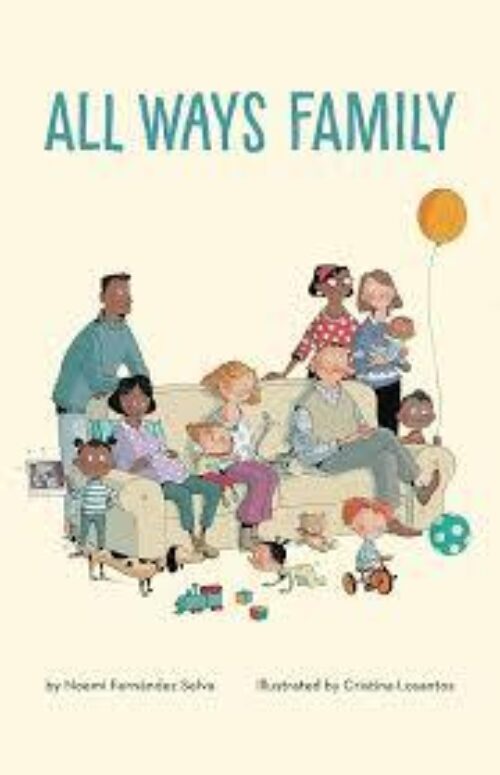
All Ways Family
✏️By: Noemí Fernández Selva
📅Date Published: February 2020
ISBN: 978-1-4338-3152-2
Reading Level: Ages 6-10
📃Summary:
Paula will soon have a little brother. Martina wonders why she only has a mom, and John remembers when he was adopted. Families are like people: No two are alike! Some kids live with their mom and dad, some kids live with two moms or two dads or just one parent. Lots of kids are adopted. Some kids know their birth parents, some do not. All Ways Family is a story about all the kinds of families and all about yours, too! This book also includes information about where babies come from. Contains informative end matter with a glossary of terms and frequently asked questions.
Books for Youth

All the Impossible Things
✏️By: Lindsay Lackey
📅Date Published: May 2022
ISBN: 978-1-25061-890-0
Reading Level: Ages 8-12
📃Summary:
Red’s inexplicable power over the wind comes from her mother. Whenever Ruby “Red” Byrd is scared or angry, the wind picks up. And being placed in foster care, moving from family to family, tends to keep her skies stormy. Red knows she has to learn to control it, but can’t figure out how.
This time, the wind blows Red into the home of the Grooves, a quirky couple who run a petting zoo, complete with a dancing donkey and a giant tortoise. With their own curious gifts, Celine and Jackson Groove seem to fit like a puzzle piece into Red’s heart.
But just when Red starts to settle into her new life, a fresh storm rolls in, one she knows all too well: her mother. For so long, Red has longed to have her mom back in her life, and she’s quickly swept up in the vortex of her mother’s chaos. Now Red must discover the possible in the impossible if she wants to overcome her own tornadoes and find the family she needs.
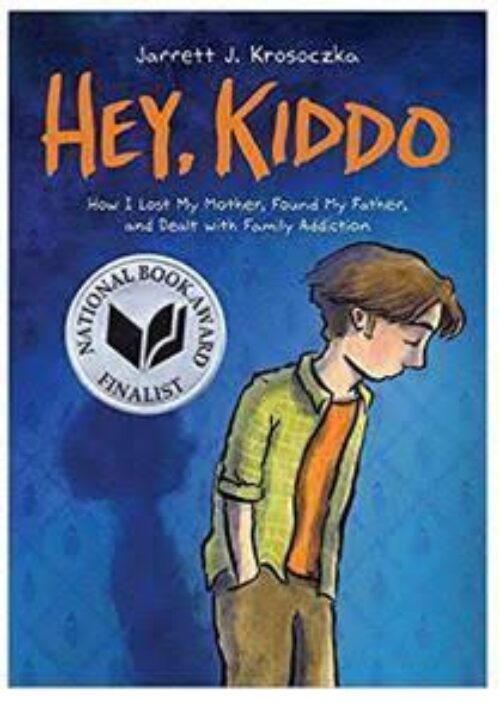
Hey, Kiddo: A Graphic Novel How I Lost My Mother, Found My Father, and Dealt with Family Addiction
✏️By: Jarrett J. Krosoczka (grew up in kinship care)
📅Date Published: October 2018
ISBN: 978-0-54590-248-9
Reading Level: Ages 11-15 (Grades 7-9)
📃Summary:
In this graphic memoir, Jarrett J. Krosoczka shares his experience growing up with his grandparents while navigating his mother’s addiction, an unknown father, family secrecy, and his search for identity and belonging. This lived-experience book may help older youth and adults talk about kinship care, parental substance use, missing family information, and complicated family love.
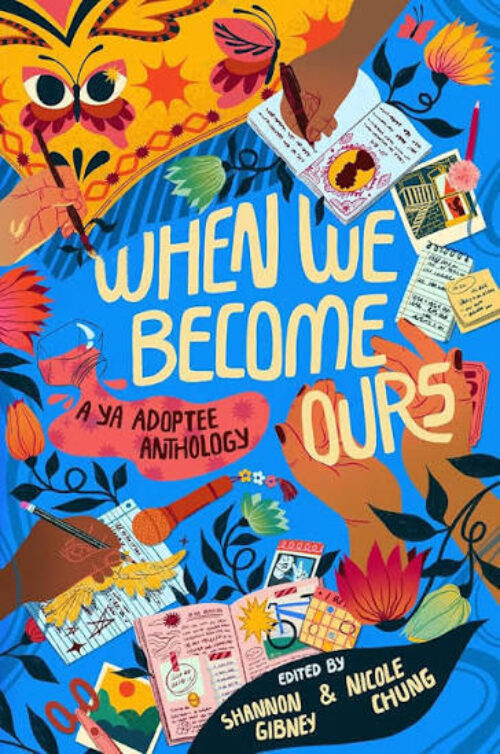
When We Become Ours: A YA Adoptee Anthology
✏️Edited By: Shannon Gibney & Nicole Chung
📅Date Published: October 2023
ISBN: 978-0-06314-440-8
Reading Level: from 14 (Grades 8+)
📃Summary:
There is no universal adoption experience, and no two adoptees have the same story. This anthology for teens contains a wide range of powerful, poignant, and evocative stories in a variety of genres. These tales from fifteen adoptee authors genuinely and authentically reflect the complexity, breadth, and depth of adoptee experiences. This groundbreaking collection centers what it’s like growing up as an adoptee. These are stories by adoptees, for adoptees, reclaiming their own narratives.
Reshuffled: Real Stories of Hope and Resilience from Foster Care
✏️By: Tracy Gharbo & Linda Palmer (CASA volunteers)
📅Date Published: 2021
ISBN: 978-1-63195-311-8
Reading Level: from 14 (Grades 8+)
📃Summary:
Within Reshuffled, 22 adults, who experienced foster or kinship care, tell their stories. Intended to inspire older youth in foster/kinship care, this book also informs resource providers and child welfare workers about what worked and what did not work for the youth. The stories in this book are compelling, some unimaginable, but all filled with hope and resilience. From true Rocket Scientists, judges, teachers, healthcare workers and more, Reshuffled will change your perspective of foster care and the youth who enter it.
Books for Adults
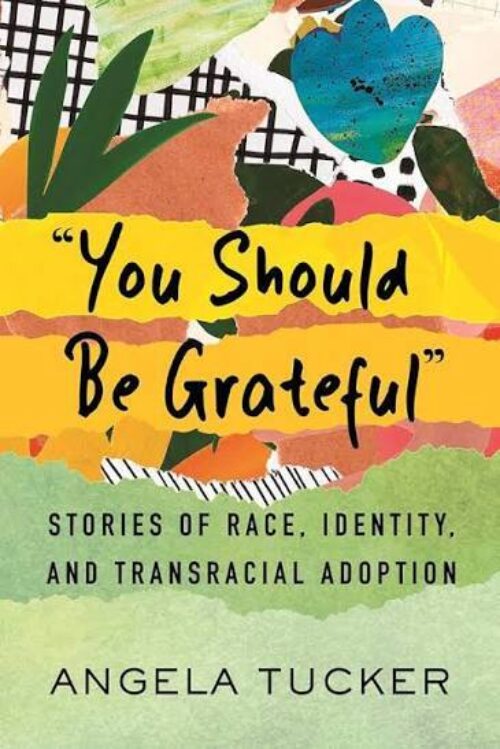
“You Should Be Grateful” Stories of Race, Identity, and Transracial Adoption
✏️By: Angela Tucker (transracial adoptee)
📅Date Published: April 2023
ISBN: 978-0-80700-651-1
📃Summary:
“Your parents are so amazing for adopting you. You should be grateful!” Angela Tucker is a Black woman, adopted from foster care by white parents. She has heard this microaggression her entire life, usually from well-intentioned strangers who view her adoptive parents as noble saviors. She is grateful for many aspects of her life, but being transracially adopted involves layers of rejection, loss and complexity that cannot be summed up so easily. Tucker centers the experiences of adoptees through sharing deeply personal stories, well-researched history and engrossing anecdotes from mentorship sessions with adopted youth. These perspectives challenge the fairy-tale narrative of adoption giving way to a fuller story that includes the impacts of racism, classism, family, love and belonging.
Reshuffled: Real Stories of Hope and Resilience from Foster Care
✏️By: Tracy Gharbo & Linda Palmer (CASA volunteers)
📅Date Published: 2021
ISBN: 978-1-63195-311-8
Reading Level: from 14 (Grades 8+)
📃Summary:
Within Reshuffled, 22 adults, who experienced foster or kinship care, tell their stories. Intended to inspire older youth in foster/kinship care, this book also informs resource providers and child welfare workers about what worked and what did not work for the youth. The stories in this book are compelling, some unimaginable, but all filled with hope and resilience. From true Rocket Scientists, judges, teachers, healthcare workers and more, Reshuffled will change your perspective of foster care and the youth who enter it.
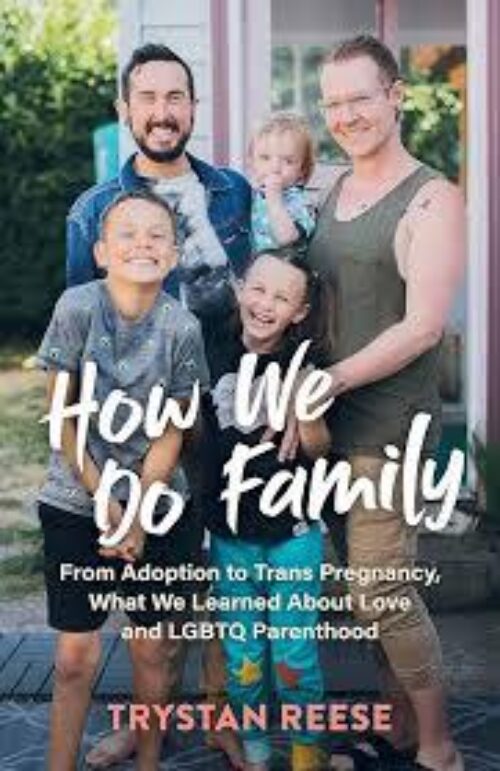
How We Do Family: From Adoption to Trans Pregnancy, What We Learned About Love and LGBTQ Parenthood
✏️By: Trystan Reese (kinship parent)
📅Date Published: June 2021
ISBN: 978-1-61519-756-9
📃Summary:
Trystan and Biff had been dating for just a year when the couple learned that Biff’s niece and nephew were about to be removed from their home by Child Protective Services. Immediately, Trystan and Biff took in one-year-old Hailey and three-year-old Lucas, becoming caregivers overnight to two tiny survivors of abuse and neglect.
In this memoir, Trystan Reese shares his family’s experience with kinship caregiving, adoption, LGBTQ+ parenthood, trans pregnancy, and building family outside traditional expectations. The book offers a valuable lived-experience perspective, especially for understanding LGBTQ+ and trans adoptive/kinship parenting.
What White Parents Should Know About Transracial Adoption: An Adoptee’s Perspective on its History, Nuances, and Practices
✏️By: Melissa Guida-Richards (transracial transnational adoptee)
📅Date Published: October 2021
ISBN: 978-1-62317-582-5
📃Summary:
The White Fragility for transracial adoption–practical tools for nurturing identity, unlearning white saviorism, and fixing the mistakes you don’t even know you’re making. Melissa Guida-Richards, a transracial and transnational adoptee, writes directly to white adoptive parents about race, identity, cultural loss, white saviorism, microaggressions, implicit bias, and how to support a child’s cultural heritage.